Pterygoid Implant — A Boon to Avoid the Cantilever
When it comes to full-mouth and posterior dental implant cases, pterygoid implants are a game-changer. These implants provide strong distal support, which is crucial for the success of full-arch restorations. At Dr Pratik's clinics in Rajkot, Junagadh, Gandhidham, and Ahmedabad, we specialize in…
Pterygoid Implants: A Boon to Avoid the Cantilever
When it comes to full-mouth and posterior dental implant cases, pterygoid implants are a game-changer. These implants provide strong distal support, which is crucial for the success of full-arch restorations. At Dr Pratik's clinics in Rajkot, Junagadh, Gandhidham, and Ahmedabad, we specialize in using cutting-edge technology to ensure painless smiles. Let's explore why pterygoid implants are a boon, especially in avoiding the dreaded cantilever effect.
The Importance of Distal Support
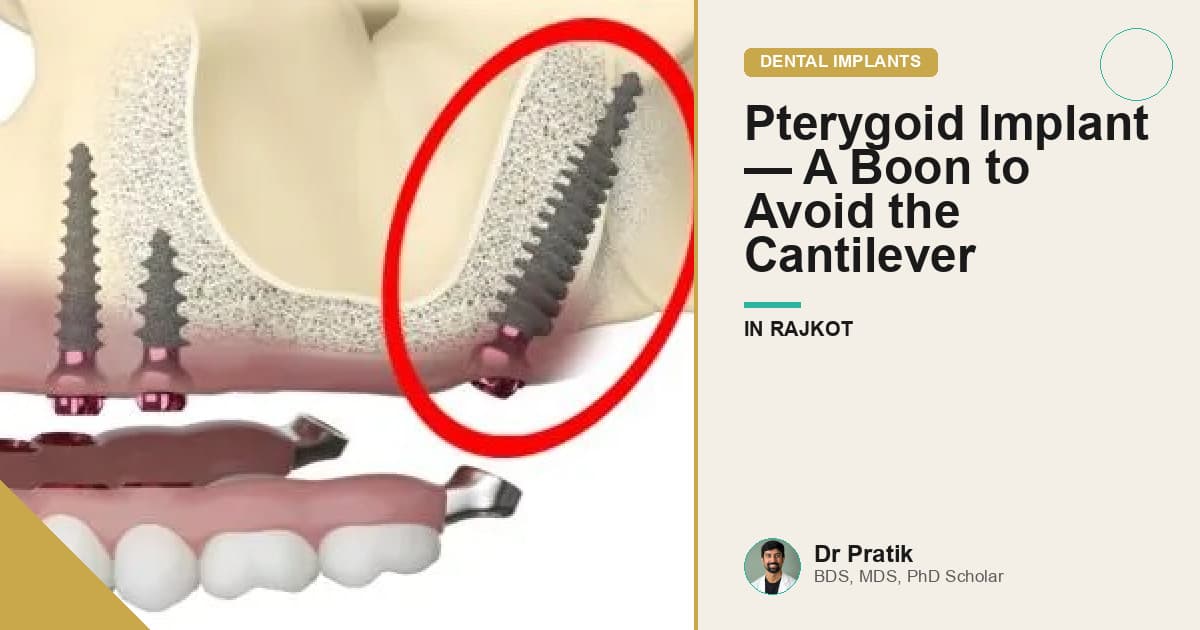
In dental implantology, distal support refers to the support provided by implants at the back of the mouth. This support is essential because it helps distribute the forces of chewing evenly, preventing undue stress on the implants. Pterygoid implants are placed in the pterygomaxillary region, which is known for its strong D1 category bone. This area provides a stable and robust foundation, much like the sturdy legs of a table.
Without proper distal support, implants can experience the cantilever effect. Imagine a diving board with only one support at the very end; it would bend and strain under weight. Similarly, in dental terms, a cantilever is a long, unsupported extension behind the last implant, which can bend and overload under pressure. This makes distal support without cantilever vital for the long-term success of full-mouth implants.
Why Pterygoid Implants Are a Boon
Pterygoid implants are a boon because they anchor into the fusion zone of the pterygomaxillary region. This area is composed of very strong D1 category bone, making it ideal for implant placement. The strength of this bone allows the implants to withstand a variety of chewing forces, roughly 300 to 400 Newtons, which is close to the load-bearing capacity of natural teeth.
By providing strong distal support, pterygoid implants eliminate the need for a cantilever, thus enhancing the longevity and success of the implant-supported prosthesis. They are particularly recommended for patients requiring full-mouth restorations or those with limited bone in the posterior maxilla, where traditional implants may not be feasible.
- Pterygoid implants are placed in the strong D1 category bone of the pterygomaxillary region.
- They provide robust distal support, eliminating the need for a cantilever.
- These implants can withstand chewing forces similar to natural teeth.
- Ideal for full-mouth restorations and patients with limited posterior bone.
- Enhance the longevity and success of implant-supported prostheses.
Dr Pratik's Expertise in Pterygoid Implants
At Dr Pratik's clinics, we take pride in our expertise in pterygoid implants. Dr Pratik is not only highly experienced but also utilizes advanced 3D planning and precise placement techniques. This ensures that each implant is positioned optimally for maximum support and longevity.
Our approach involves meticulous planning using 3D imaging technology, which allows us to visualize the patient's anatomy in detail. This precision ensures that the implants are placed in the most advantageous positions, minimizing complications and maximizing outcomes. With Dr Pratik's vast experience and technological prowess, patients can look forward to painless smiles that last.
When Are Pterygoid Implants Recommended?
Pterygoid implants are typically recommended for patients who require full-mouth restorations or those with significant bone loss in the posterior maxilla. They are particularly beneficial for individuals who have previously faced challenges with traditional implants due to insufficient bone support.
By opting for pterygoid implants, patients can avoid the complications associated with cantilevers and enjoy a more stable and durable dental restoration. If you're considering dental implants and have concerns about bone support, a consultation with Dr Pratik could provide you with the best options tailored to your needs.